Why Saasence Chooses Partnerships Over “Projects” (And Why It Pays Off)
Authored by
Saasence Editorial Team
Date Released
March 2, 2026
A project can be delivered perfectly and still fail in the real world—because technology success isn’t only technical. It’s operational. In this article, we explain why relationship-first delivery creates higher adoption, faster time-to-value, and outcomes that continue to deliver value after go-live.
Key Takeaways
- “On time and on budget” does not guarantee adoption or ROI.
- The most impactful projects begin with business context, not feature lists.
- Executive alignment early prevents misaligned expectations and scope drift.
- Post-launch support is where real value compounds through iteration.
- Relationship-first delivery turns vendors into accountable partners for outcomes.
Why “Successful” Projects Still Disappoint
Most technology engagements are structured as projects with defined scope, deadlines, budgets, and requirements. While these elements are necessary, they do not guarantee real-world success.
The true drivers of success are often human and operational factors:
- How teams actually work, including unofficial workarounds
- Internal change dynamics such as adoption, resistance, and decision ownership
- The real business reason behind the initiative
- Lessons from past system failures
A project-only vendor optimizes for delivery. A true partner optimizes for outcomes.
Saasence Insight: Most implementations do not fail because systems cannot be configured. They fail because the solution does not match real workflows—and there is no ownership after launch to correct course.
The Relationship-First Operating Model
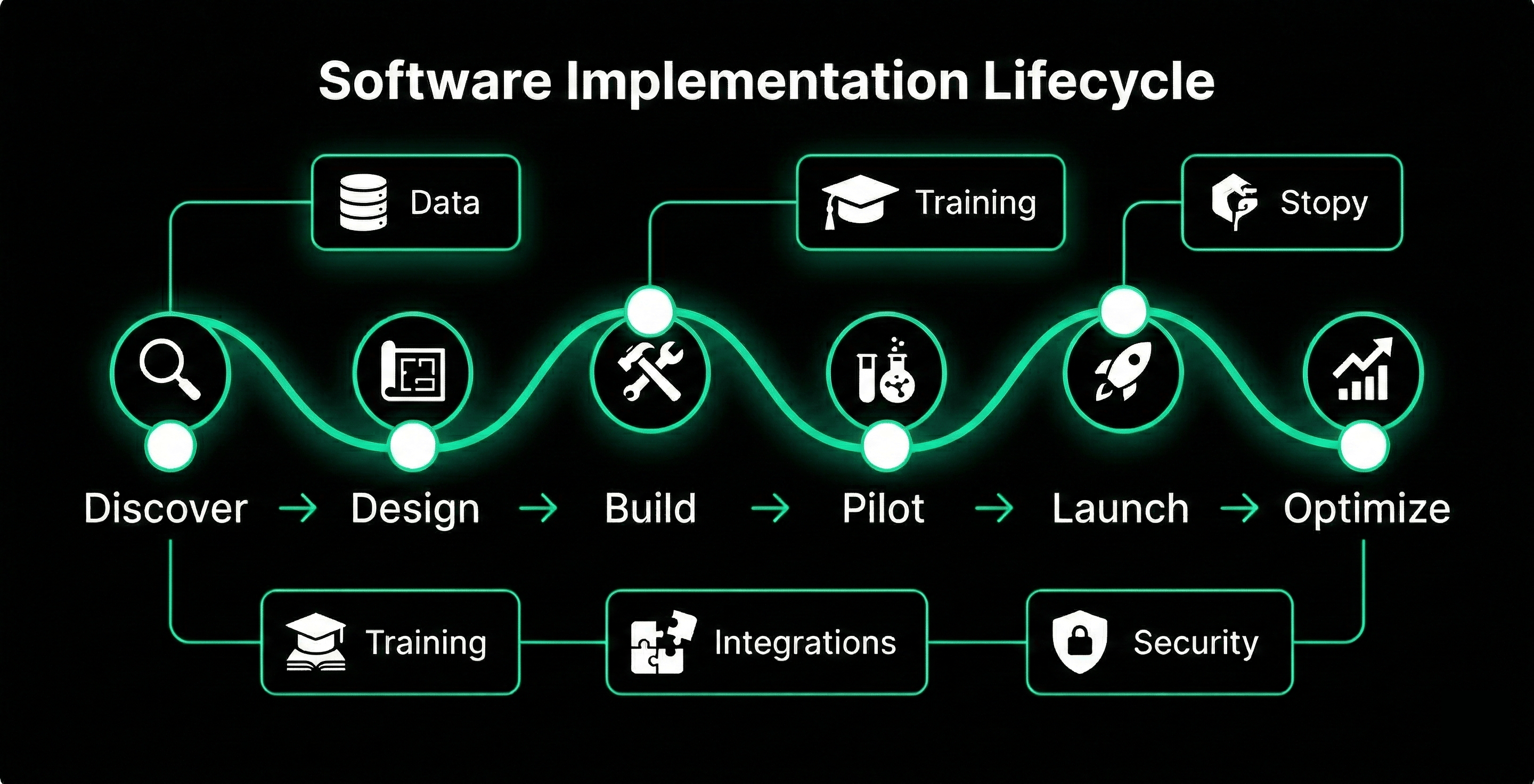
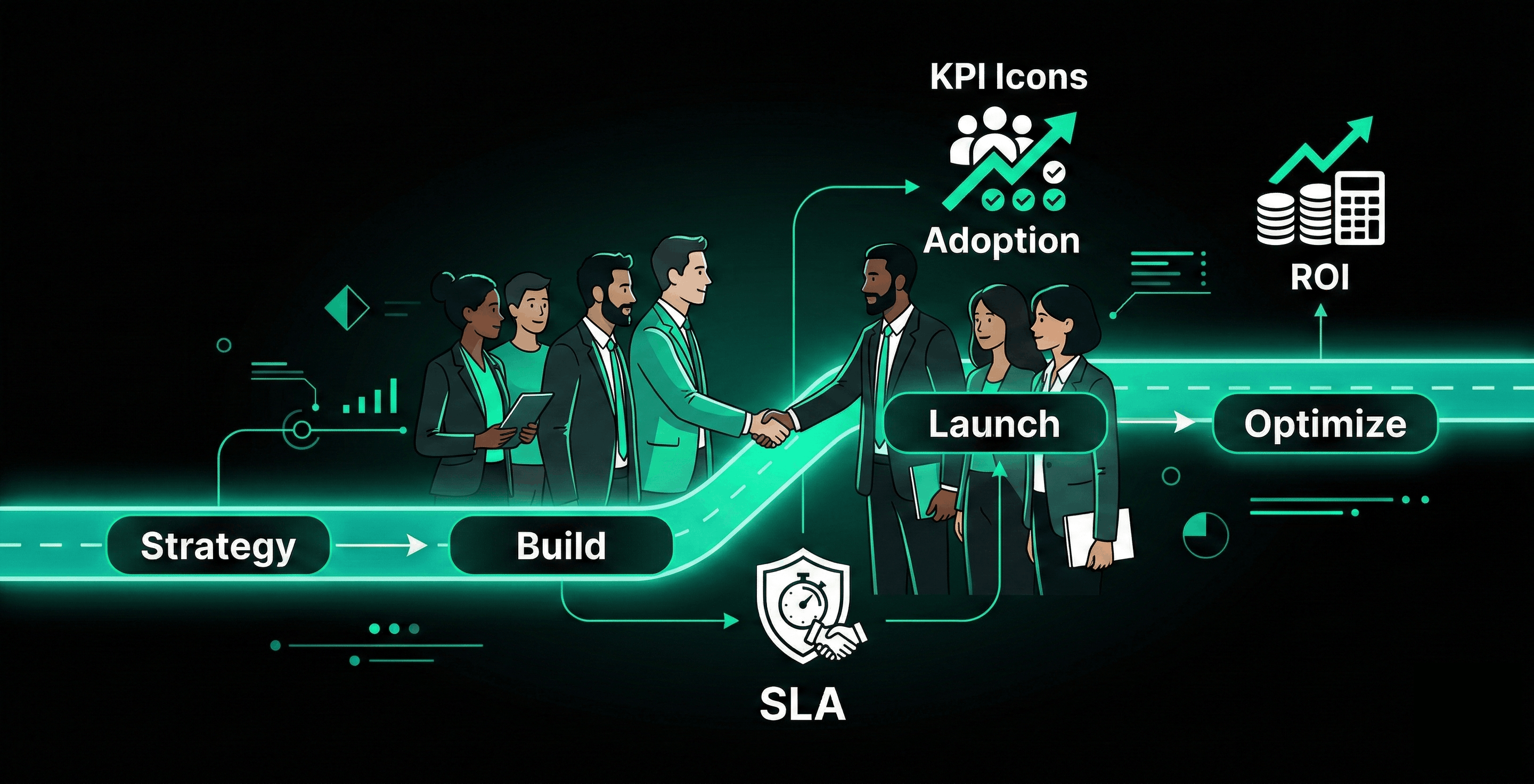
A relationship-first approach treats implementation as the start of a lifecycle rather than the end of a contract. It focuses on alignment, understanding workflows, and continuous improvement.
1) Align on Outcomes, Not Outputs
Before technical work begins, define:
- What success means in business terms
- How success will be measured using KPIs or SLAs
- Which trade-offs are acceptable
2) Understand the People Behind the Process
Real workflows often exist in gray areas that are not documented in official diagrams.
- Escalations that bypass official processes
- Hidden spreadsheets and manual trackers
- Frequent operational exceptions
- Customer commitments that shape daily behavior
3) Treat Go-Live as a Milestone, Not a Finish Line
Once systems go live, real usage reveals new opportunities for optimization.
- Adoption challenges and workflow gaps
- New operational requirements
- Performance or integration issues at scale
Continuous optimization ensures that systems continue to deliver measurable value.
How Saasence Delivers Partnerships in Practice
Executive Alignment
We establish shared expectations, decision ownership, and success metrics early to ensure that delivery stays aligned with business outcomes.
Reality-Focused Discovery
Our discovery workshops focus on real workflows, operational constraints, and existing failure points. We design solutions based on actual usage patterns rather than theoretical processes.
Strategic Execution
We combine architectural strategy with agile execution through iterative sprints, demonstrations, and validation checkpoints. This ensures progress is visible and adjustments happen quickly.
Post-Launch Optimization
After launch, we remain engaged to stabilize, optimize, and evolve the system. Continuous feedback loops transform operational insights into improvements.
Checklist: Signs You’ve Chosen the Right Partner
- Success is defined using business KPIs
- They explore real-world workflows and exceptions
- Adoption planning is included from the beginning
- Integration and governance considerations are addressed early
- Post-launch optimization is part of the engagement
- Clear escalation paths exist when challenges arise
- They challenge scope that does not support outcomes
What Most Teams Miss
- Confusing system completion with adoption
- Underinvesting in discovery and workflow analysis
- Failing to assign ownership for KPIs and governance
- Treating technology like a one-time installation
Conclusion
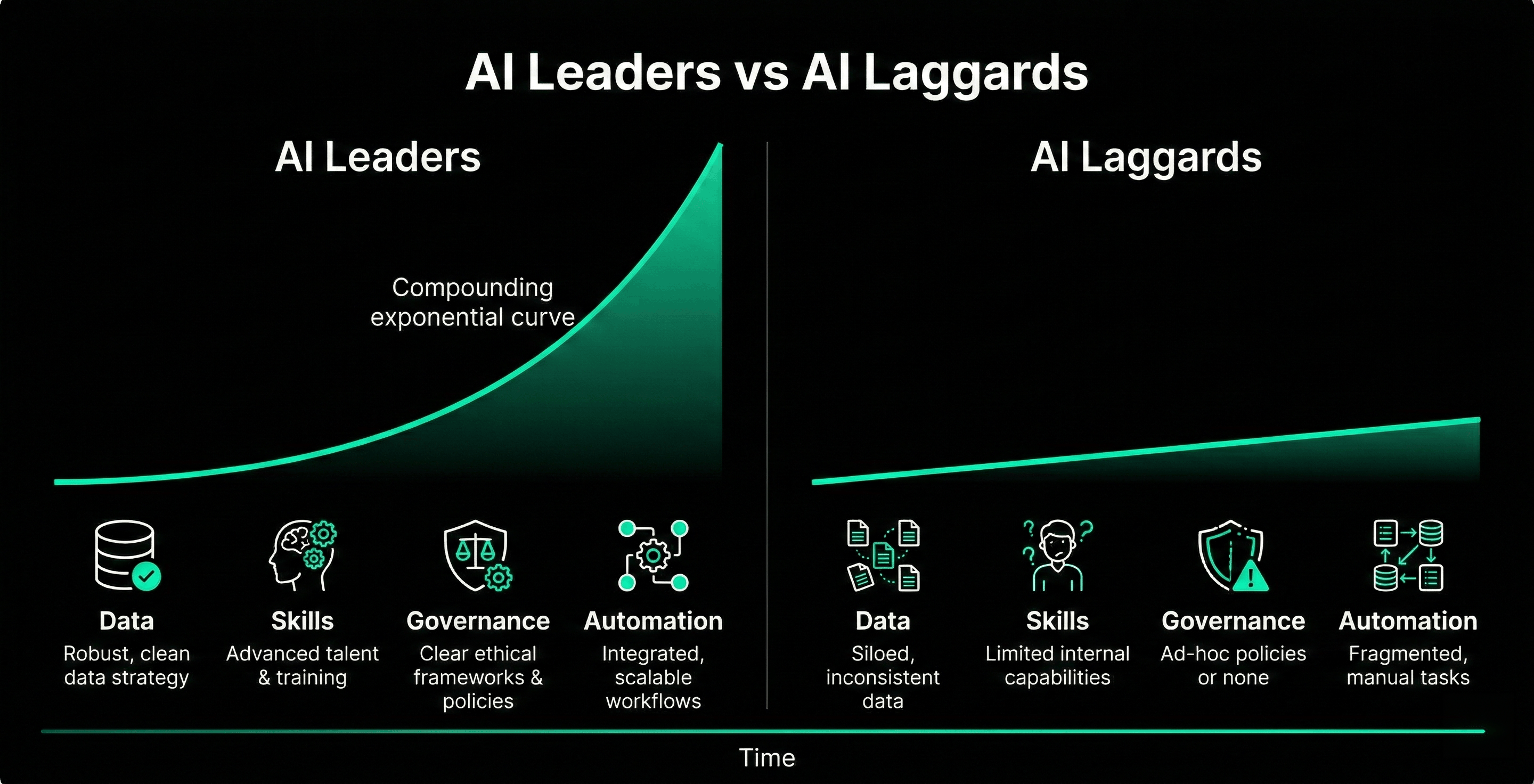
Technology succeeds when it fits the people who use it and when there is ownership to improve it after launch. A relationship-first delivery model reduces rework, increases adoption, and turns software investments into capabilities that continue to compound value over time.
Ready to Get Started?
If you want more than a vendor and are looking for a partner who ties technology delivery to measurable business outcomes, Saasence can help.