Middleware, Explained: The Integration Layers That Make Systems Work Together
Authored by
Saasence Editorial Team
Date Released
March 2, 2026
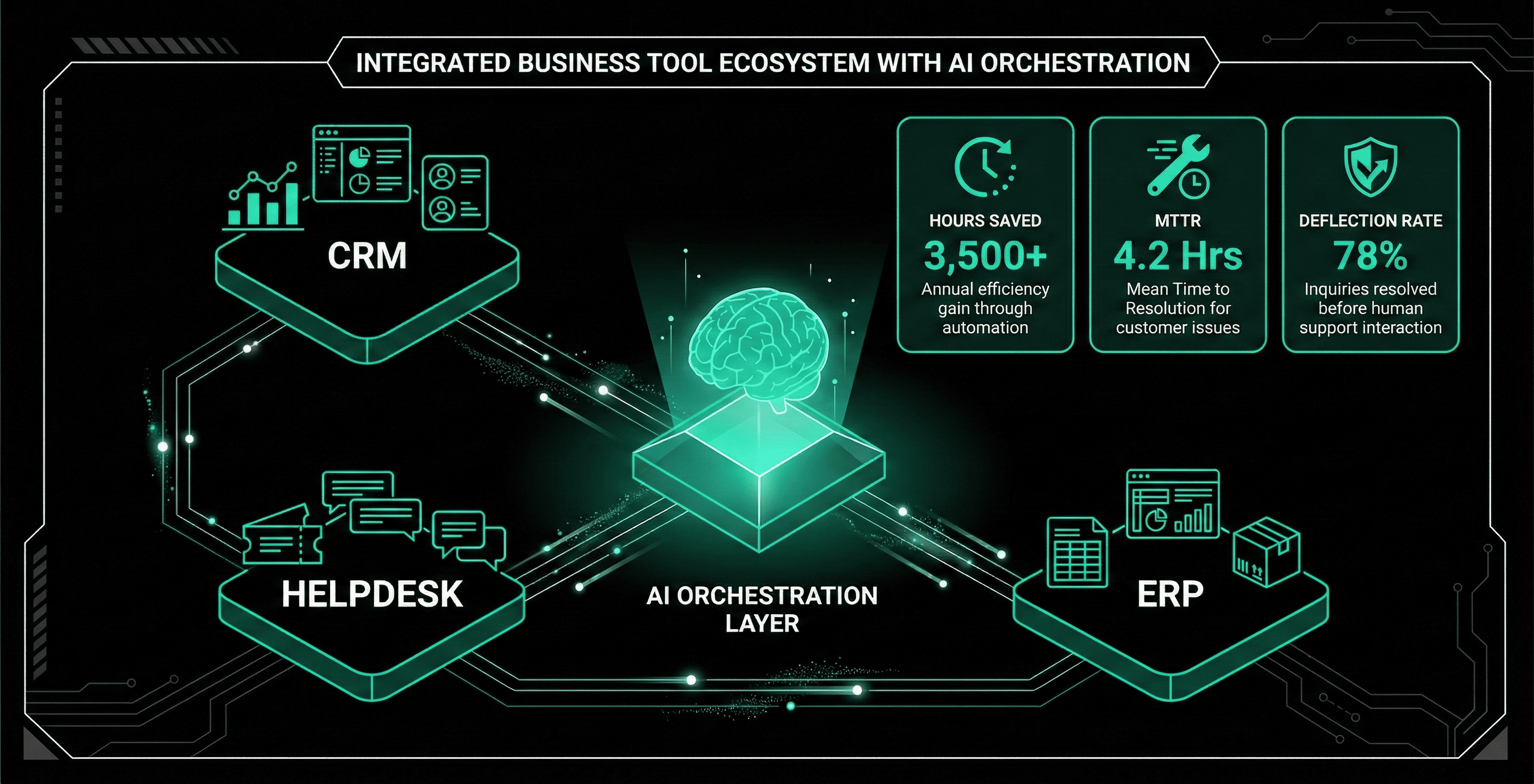
When your CRM, helpdesk, chatbot, and analytics tools don’t share context, teams end up doing manual sync work—copying data, chasing updates, and fixing broken workflows. Middleware is the layer that prevents that chaos. This guide explains the major middleware categories, when each one is the right choice, and how to design integrations that stay reliable, secure, and scalable.
Key Takeaways
- Middleware isn’t one tool—it’s a set of layers solving different integration problems.
- Use event/message middleware for reliable async workflows and RPC for real-time calls.
- API gateways and IAM middleware are the foundation for secure, governed integrations.
- Transaction middleware protects business-critical workflows from partial updates.
- The best approach is function-first: choose middleware based on latency, reliability, and risk.
Why Middleware Matters in Modern Stacks
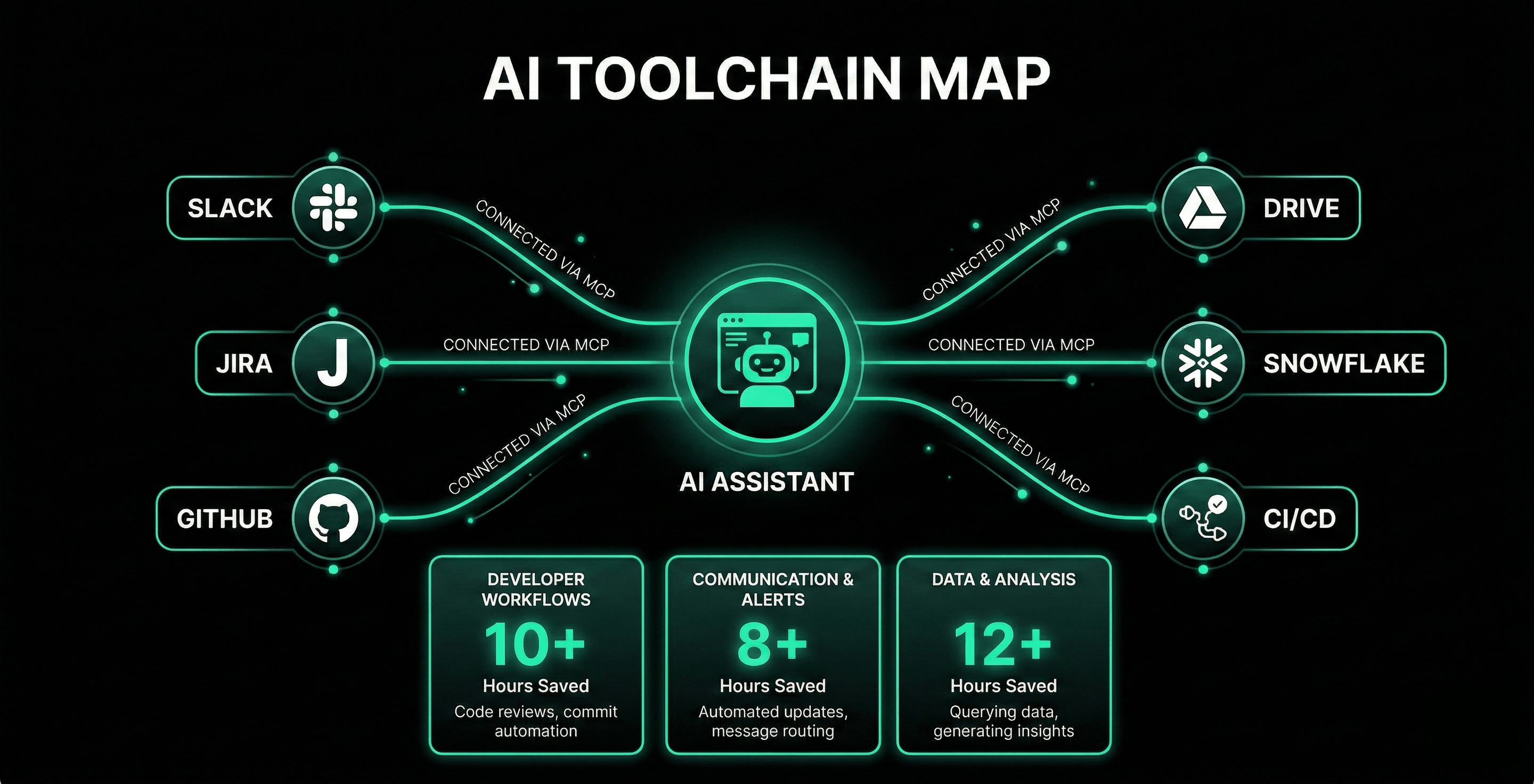
Modern businesses operate across many systems—CRMs, support platforms, chat tools, billing systems, analytics platforms, and internal services. The challenge is not acquiring tools but making them behave like one operational system.
Middleware solves the “between systems” problems:
- Keeps data consistent across platforms
- Triggers automated workflows without manual handoffs
- Improves resilience with retries, buffering, and monitoring
- Adds governance with security, access control, and audit trails
Saasence Insight: Most integration failures are not caused by “bad APIs.” They’re caused by missing guardrails—no retries, weak observability, and unclear ownership of data flows.
The Middleware Map: 7 Categories You Should Know
Think of middleware as a toolkit. Each category is designed to solve a specific communication problem between systems.
1) API Middleware (API Gateway / Integration Layer)
What it does: Manages how services communicate through APIs.
- Routing requests between services
- Authentication and authorization
- Rate limiting and analytics
- Versioning and schema validation
Where it shines: SaaS integrations, partner APIs, and microservices environments.
2) Message & Event Middleware (Queues / Pub-Sub)
Moves data asynchronously using messages and events so systems do not need to be online at the same time.
Where it shines:
- High-volume workflows
- Background processing
- Decoupled architectures
- Handling spikes reliably
3) RPC Middleware (Real-Time Service Calls)
Allows one service to call another service’s function directly and wait for an immediate response.
Best used for:
- Real-time lookups
- Coordinated service actions
- Low-latency microservice communication
Trade-off: Faster responses but tighter coupling between services, so timeouts and circuit breakers are essential.
4) Transaction Processing Middleware
Ensures multi-step workflows behave atomically—either everything succeeds or the entire operation rolls back safely.
Typical use cases:
- Billing updates and refunds
- Provisioning workflows
- SLA-impacting operational changes
5) Database Middleware (Data Access Layer)
Manages database connections, pooling, and secure access across multiple applications.
- Shared operational data access
- Multi-database environments
- Performance optimization
- Consistent security rules
6) IAM Middleware (Identity & Access Management)
Centralizes authentication and authorization across systems.
- Single Sign-On (SSO)
- Role-based access control (RBAC)
- Multi-factor authentication (MFA)
- Audit logging
7) Legacy / Object Middleware
Enables older enterprise systems built with different technologies to communicate through standardized interfaces.
While less common in modern architectures, it remains essential in legacy-heavy enterprise environments.
Mini Scenario: Middleware for a Support Stack
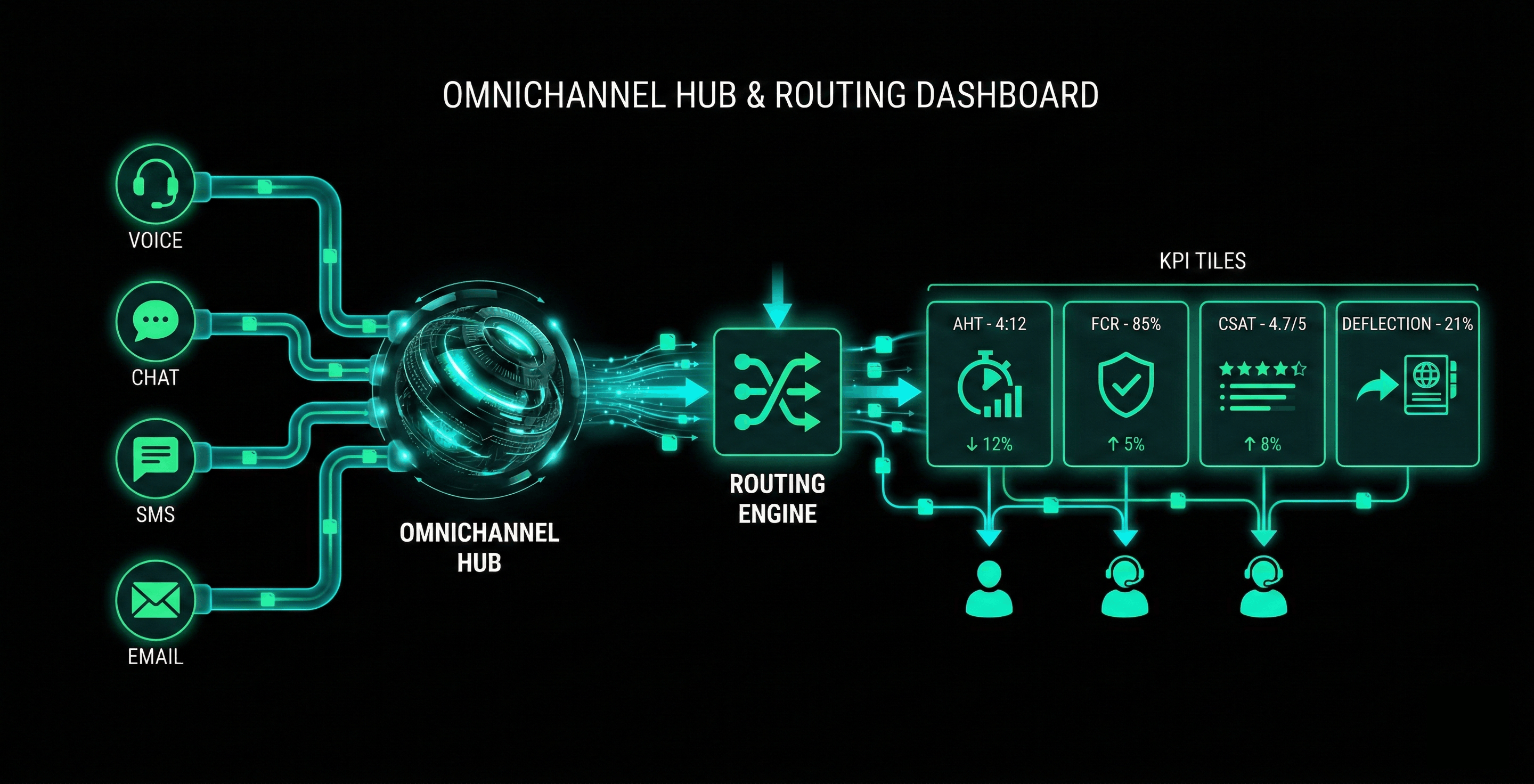
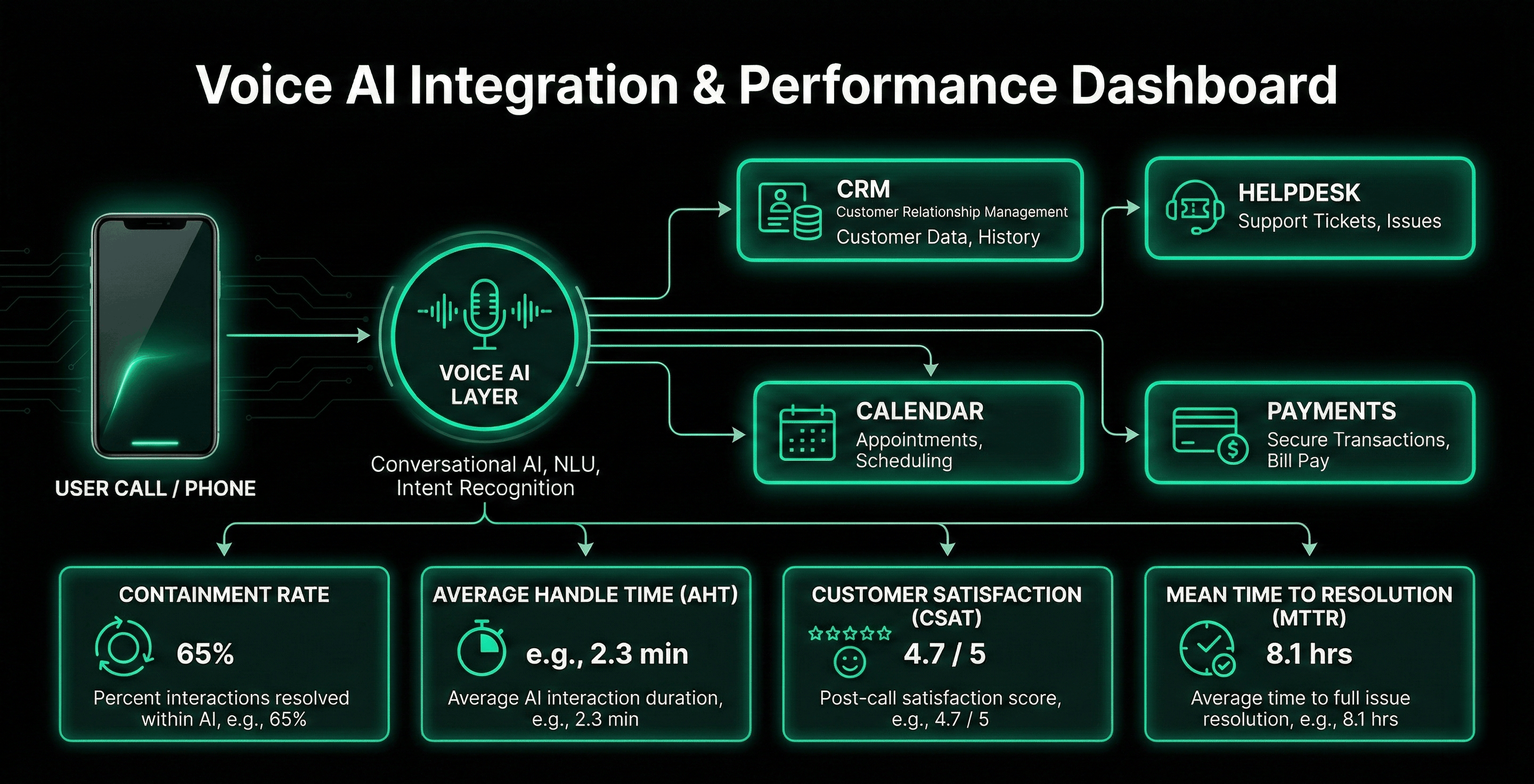
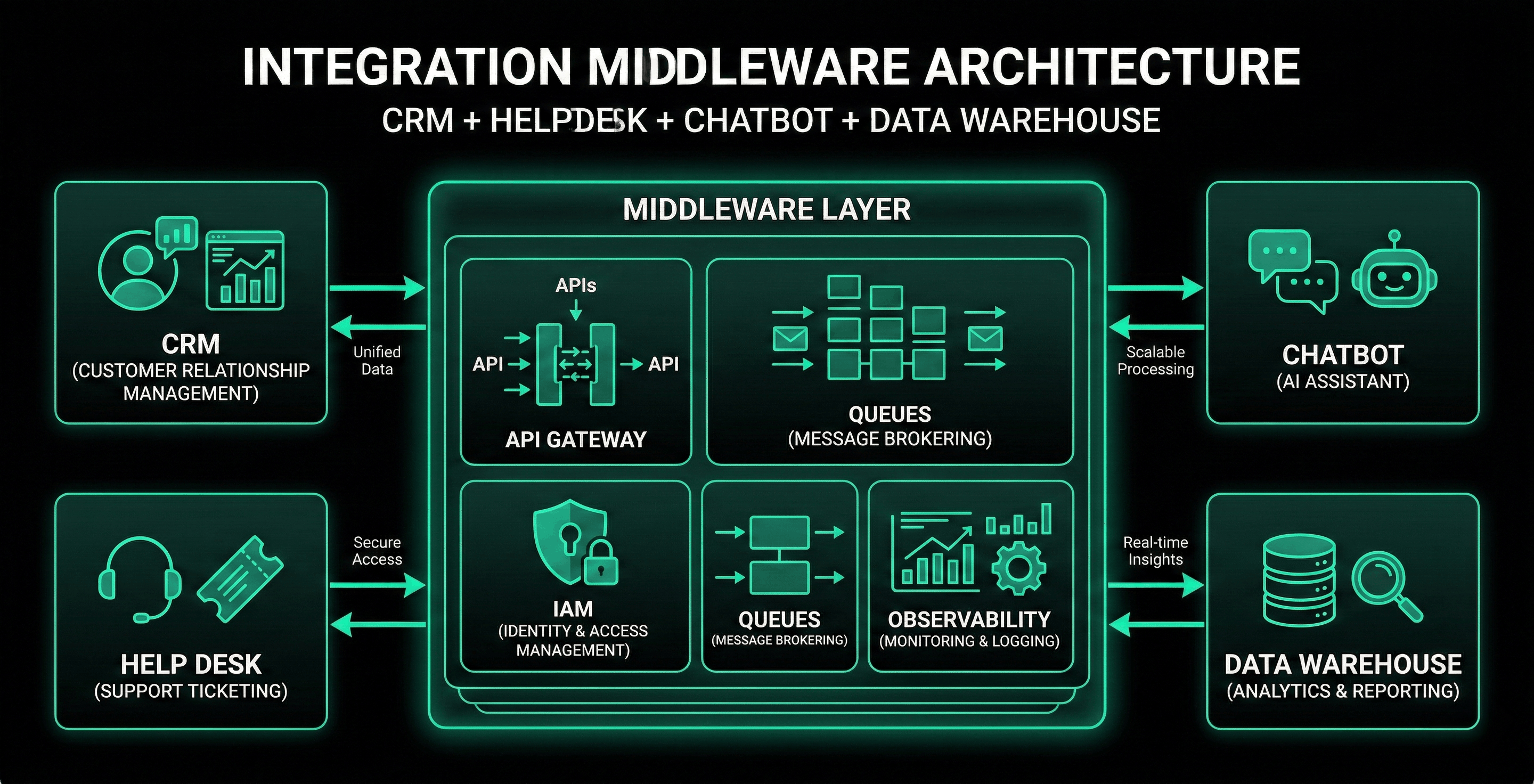
Imagine integrating a chatbot, helpdesk platform, CRM, billing system, and analytics environment.
A practical architecture might include:
- Event middleware for ticket creation and analytics logging
- API gateway for governance and security
- RPC calls for real-time CRM or billing lookups
- IAM middleware for SSO and RBAC access control
This architecture keeps customer interactions fast while ensuring reliability, governance, and observability.
Decision Framework: Choosing the Right Middleware
If you need reliable asynchronous workflows:
Choose Message/Event Middleware.
If you need real-time responses:
Use RPC Middleware or direct APIs.
If you need secure and governed APIs:
Implement API Gateway Middleware.
If you need atomic multi-step operations:
Use Transaction Processing Middleware.
If you need consistent database access:
Use Database Middleware.
If you need identity governance:
Implement IAM Middleware.
Saasence Insight: Choose middleware based on failure modes— latency, retries, data consistency, security, and observability.
Checklist: Designing Middleware That Doesn’t Break
- Identify whether integrations are synchronous or asynchronous
- Define the source of truth for data
- Add retries, idempotency, and dead-letter queues for events
- Implement timeouts and circuit breakers for RPC calls
- Centralize authentication and access control
- Implement monitoring, logging, and alerts
- Standardize error formats and API versioning
- Create audit trails for critical workflows
What Most Teams Miss
- Treating middleware as simple “plumbing” instead of an operational layer
- Skipping retries and idempotency protections
- Over-centralizing integrations into a single bottleneck
- Not planning for API evolution and schema changes
How Saasence Helps
Saasence designs and implements integration architectures that stay reliable under real operational load. We help teams choose the right middleware mix, build API-first connectivity, implement event-driven workflows, and add observability and governance that prevent integration failures.
Conclusion
Middleware is the difference between a collection of disconnected tools and a fully integrated operational system. By combining API governance, event reliability, real-time service calls, transaction safety, and identity control, organizations can build integrations that scale with confidence.
Ready to Get Started?
If your tools feel disconnected—or your integrations keep breaking—Saasence can help you design a middleware strategy that is reliable, secure, and built to scale.